
Detecting Misleading Financial Data: A Fundamental Investor's Guide
The Imperative of Scrutiny
Financial statements, while designed to provide a true and fair view of a company's performance and position, are subject to various influences, including accounting standards' flexibility, management's interpretations, and, in rare instances, deliberate misrepresentation. Fundamental investors must move beyond a superficial reading of reported figures and apply rigorous analysis to uncover the underlying economic substance.
Common Areas of Misleading Data
Understanding where discrepancies often arise is the first step in effective due diligence.
Aggressive Revenue Recognition
One frequent area involves the timing and conditions under which revenue is recorded. Companies might recognize revenue prematurely (e.g., before delivery or acceptance), through channel stuffing, or by structuring non-substantive transactions. Scrutinizing the relationship between revenue growth and cash flow from operations, as well as comparing it to industry trends, can highlight potential issues.
Creative Expense Management
Companies may employ tactics to defer expenses or capitalize items that should be expensed, artificially boosting current period profits. Examples include aggressive capitalization of R&D or marketing costs, or under-reserving for bad debts or warranty claims. Examining the cash flow statement alongside the income statement provides a clearer picture of actual cash expenditure versus reported accruals.
Off-Balance Sheet Entities and Debt
Complex corporate structures, including special purpose entities (SPEs) or joint ventures, can be used to keep significant liabilities or risky assets off the primary balance sheet. This practice can understate a company's true leverage and financial risk. Thoroughly reviewing footnotes and management discussion and analysis (MD&A) for disclosures related to these structures is essential.
Non-GAAP Adjustments
While non-GAAP (Generally Accepted Accounting Principles) metrics can sometimes offer useful insights into operational performance by excluding non-recurring or non-cash items, they can also be manipulated. Companies may selectively exclude expenses that are recurring in nature or strategically present numbers that obscure underlying operational challenges. Always compare non-GAAP figures directly to their GAAP counterparts and understand the rationale for adjustments.
Mitigation Strategies for Fundamental Investors
Protecting an investment thesis against misleading data requires a structured approach.
- Deep Dive into Footnotes: The detailed disclosures often contain critical information that clarifies or contradicts summary financial figures. Look for details on revenue recognition policies, significant estimates, contingent liabilities, and related party transactions.
- Compare with Peers: Benchmark accounting practices, key financial ratios, and operational trends against industry competitors. Significant deviations without clear business reasons warrant further investigation.
- Scrutinize Cash Flow Statements: Cash flow from operations is generally harder to manipulate than accrual-based net income. Consistent discrepancies between net income and operating cash flow, or negative operating cash flow despite reported profits, signal potential issues.
- Understand Management Incentives: Link executive compensation structures to reporting practices. Performance-based incentives tied to specific financial metrics can create pressure to manipulate figures.
- Analyze Trends Over Time: Look for inconsistencies in accounting policies or sudden, unexplained changes in financial trends. Erratic patterns can indicate aggressive accounting.
Leveraging Technology for Enhanced Due Diligence
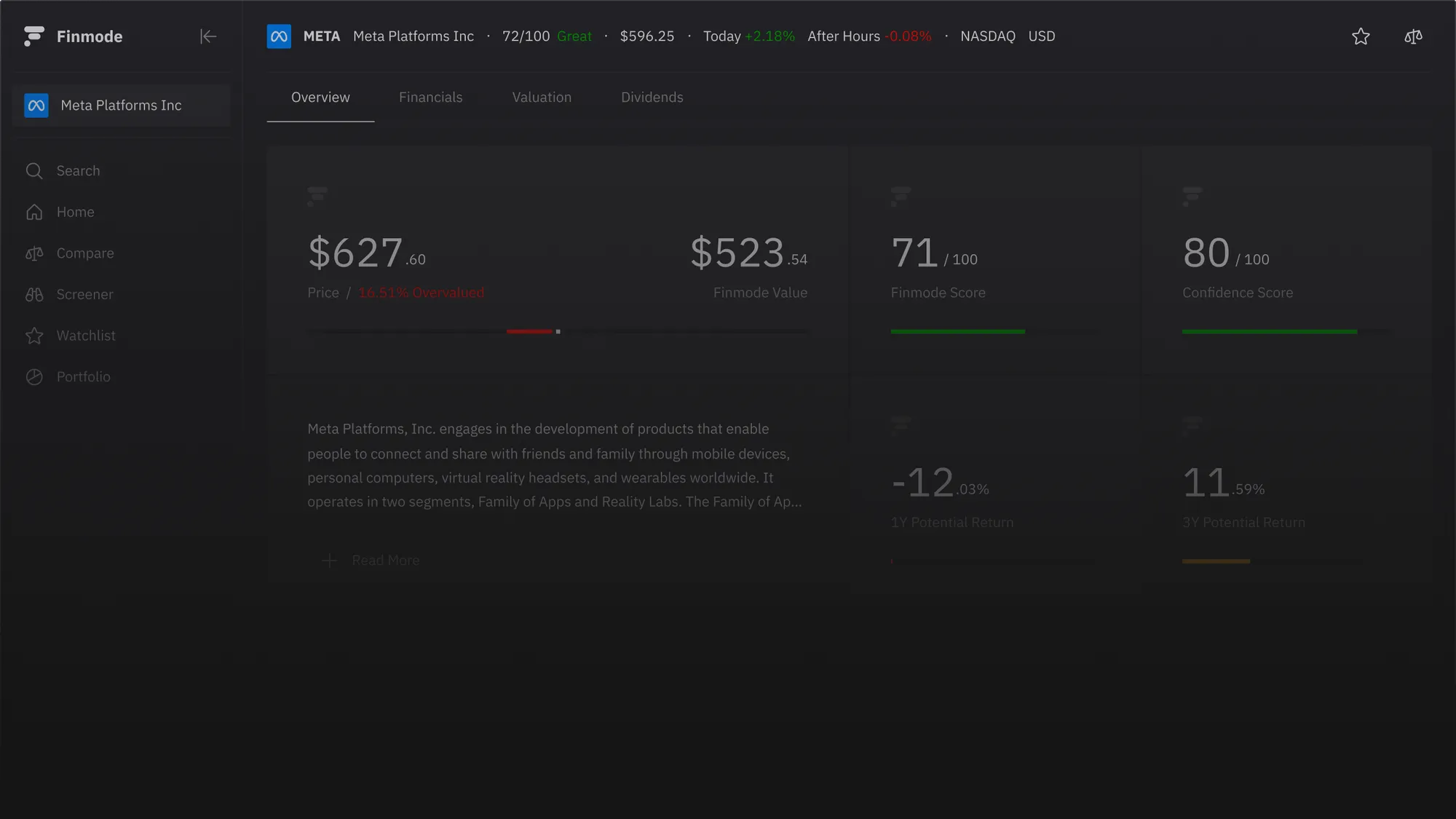
Platforms like finmode.app provide tools to normalize financial data, identify discrepancies through comparative analysis, and offer deeper insights into underlying financial health. By aggregating and standardizing data, investors can more efficiently cross-reference reported figures against industry benchmarks and historical performance, enhancing the capacity to detect anomalies that might otherwise remain hidden.
Conclusion
Identifying misleading financial data is not about cynicism, but about rigorous due diligence and a commitment to understanding economic reality over reported figures. By applying structured scrutiny, leveraging all available disclosures, and utilizing advanced analytical tools, fundamental investors can build a more robust and resilient investment portfolio.
Read more insights
Try Finmode Today
Free To Get Started

While we strive to provide accurate and reliable information, the content provided on this platform is for informational purposes only and should not be construed as financial advice. The information contained herein is based on data and analysis that we believe to be accurate and reliable, but it is not guaranteed to be complete or error-free.
No Investment Advice:
The information provided does not constitute a recommendation to buy, sell, or hold any security. Any decision to invest in any security should be made based on your own research and analysis, or with the assistance of a qualified financial advisor.
Risk of Loss:
Investing in stocks involves significant risk, including the potential for loss of principal. Past performance is not indicative of future results.No
Warranty:
We make no warranties, expressed or implied, as to the accuracy, completeness, or reliability of the information provided. We are not liable for any losses or damages, direct or indirect, arising from the use or reliance on the information provided.
User Responsibility:
It is your sole responsibility to evaluate the accuracy, completeness, and reliability of the information provided and to make your own investment decisions.
FINMODE S.R.L - DOGLIANI (CN) PIAZZA VITTORIO GRASSO 12 - P.IVA 04164500045 - N.REA CN - 340581 - CAP. SOCIALE 15000€